Psycholinguistic Language Learning Digital Novel
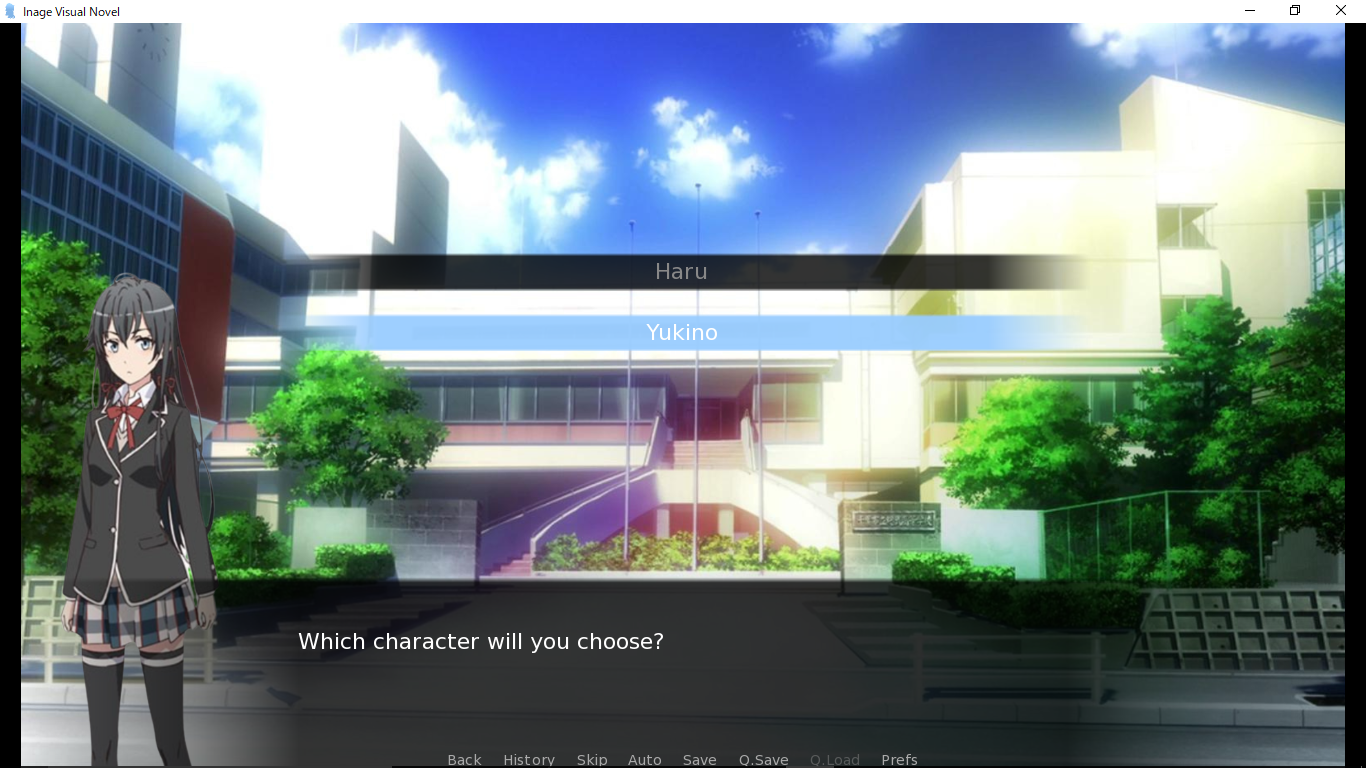
Project Overview
This interactive visual novel applies evidence-based psycholinguistic principles to enhance English communication skills among Japanese high school students. By embedding language learning within familiar school environments and peer interactions, the game creates optimal conditions for natural language acquisition while reducing anxiety and increasing engagement.
Project Details
Timeline: 2022–2023 Academic Year
Location: Sogo High School, Chiba, Japan
Target Audience: High School Students (Ages 15-18)
Platform: Ren'Py (Python-based)
Key Game Features
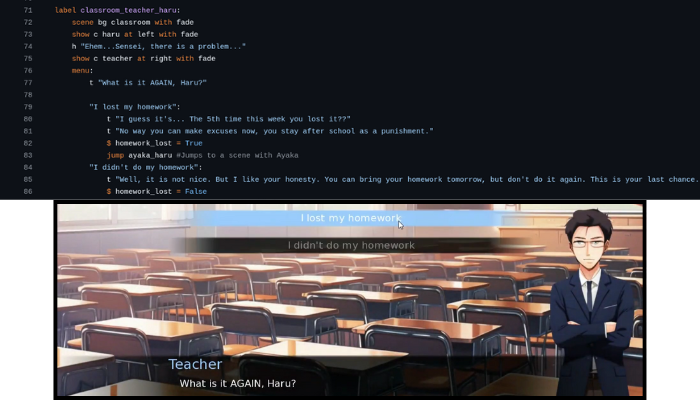
- 8+ Different Endings - Multiple story paths based on player choices
- Diverse Characters - Japanese classmates and international students
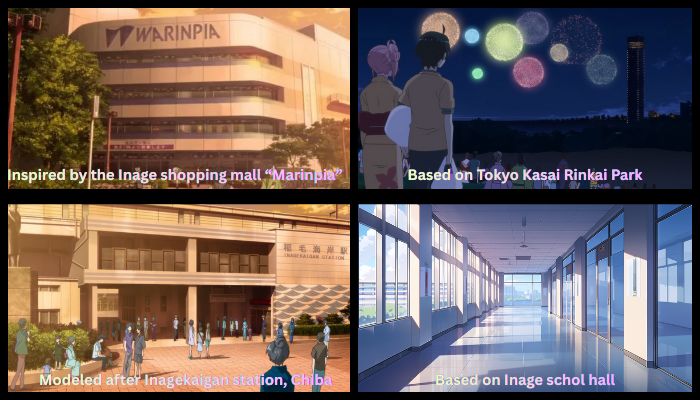
- Real School Locations - Authentic photos from students' actual high school
- Natural Dialogue - Age-appropriate conversations reflecting real teen interactions
- Replayability - Explore different choices to practice language in varied contexts
Feature: Environment Setting
The environment is based on a realistic, animated-style image of the school’s actual location. The site is well known among anime fans, as it is associated with Yahari Ore no Seishun Love Come wa Machigatteiru. (My Youth Romantic Comedy Is Wrong, As I Expected, 2013), commonly known as Oregairu, created by a graduate of the same school.
Methodology: The Psychology Behind the Design
The project is grounded in four established psycholinguistic theories that directly inform its structure and learning experience.
1. Willingness to Communicate (WTC)
Learners speak more when they feel socially comfortable and contextually secure.
Application: Students interact with same-age peers in familiar school settings, increasing confidence and voluntary English use.
2. Schema Theory
Familiar contexts reduce cognitive load and support comprehension.
Application: Real school locations and everyday situations allow students to focus on language, not interpreting unfamiliar scenarios.
3. Input Hypothesis (i+1)
Language acquisition occurs when input is slightly above the learner's current level.
Application: Dialogue blends known structures with new expressions supported by context and repetition.
4. Affective Filter
Anxiety and fear inhibit language acquisition.
Application: Private, choice-based gameplay lowers stress and encourages experimentation without social risk.
Development Process
- Student Input: Surveyed students about their interests and comfort with different social scenarios
- Environmental Design: Photographed school locations students interact with daily
- Dialogue Writing: Created conversations using vocabulary from their curriculum plus contextualized new phrases
- Coding Instruction: Taught students basic Python/Ren'Py to understand game mechanics
- Playtesting: Iteratively refined based on student feedback and engagement patterns
Story Branching Structure
Learning Outcomes & Results
- Vocabulary Growth: Students acquired contextual vocabulary through repeated exposure in meaningful scenarios, with measurable improvements in retention compared to traditional methods
- Reading Comprehension: Familiar contexts enabled focus on language processing rather than situation interpretation, leading to faster comprehension speeds
- Communication Confidence: Low-pressure game environment significantly increased willingness to engage with English content both in-game and in classroom discussions
- Practical Application: Dialogue reflected real peer interactions, preparing students for authentic communication situations they encounter daily
- Technical Skills: Students learned basic Python programming and game development concepts, with several continuing independent projects
- Sustained Engagement: Multiple story paths encouraged repeated play and language pattern reinforcement, with students voluntarily replaying 3-5 times on average
Technical Summary
Programming Languages
- Python (Ren'Py Scripting)
- HTML/CSS (for web integration)
Software & Libraries
- Ren'Py Visual Novel Engine
- GIMP (Image Editing)
- Audacity (Audio Editing)
Development Tools
- Visual Studio Code (Code Editor)
- GitHub (Version Control)
- Itch.io (Game Distribution)
Play the Game
Experience the game firsthand or explore the source code to see how psycholinguistic principles were implemented in the game design.
Play on Itch.io View Source Code Watch YouTube Walkthrough
Educational Use Notice
All images and sound effects are royalty-free or created specifically for this educational project. Student participation was voluntary with appropriate institutional consent. When using or citing this work in educational contexts, please acknowledge the theoretical frameworks and pedagogical approaches described above.